

Our Work


Bull Kelp
The PCOR Initiative is creating the largest network of bull kelp restoration sites along the North Coast of California.

About Bull Kelp
Kelps are large brown algae that often grow in dense stands, forming underwater forests that define many temperate rocky reefs. Kelp forest and rocky reef ecosystems support thousands of marine species and communities along the California coast and provide billions of dollars in ecosystem services worldwide. In addition to the direct value of kelp harvest, kelp forests provide critical habitat and food for species that comprise important fisheries, including abalone, crab, and urchins. They are also iconic marine habitats, providing cultural and recreational benefits to local communities.
The Kelp Crisis
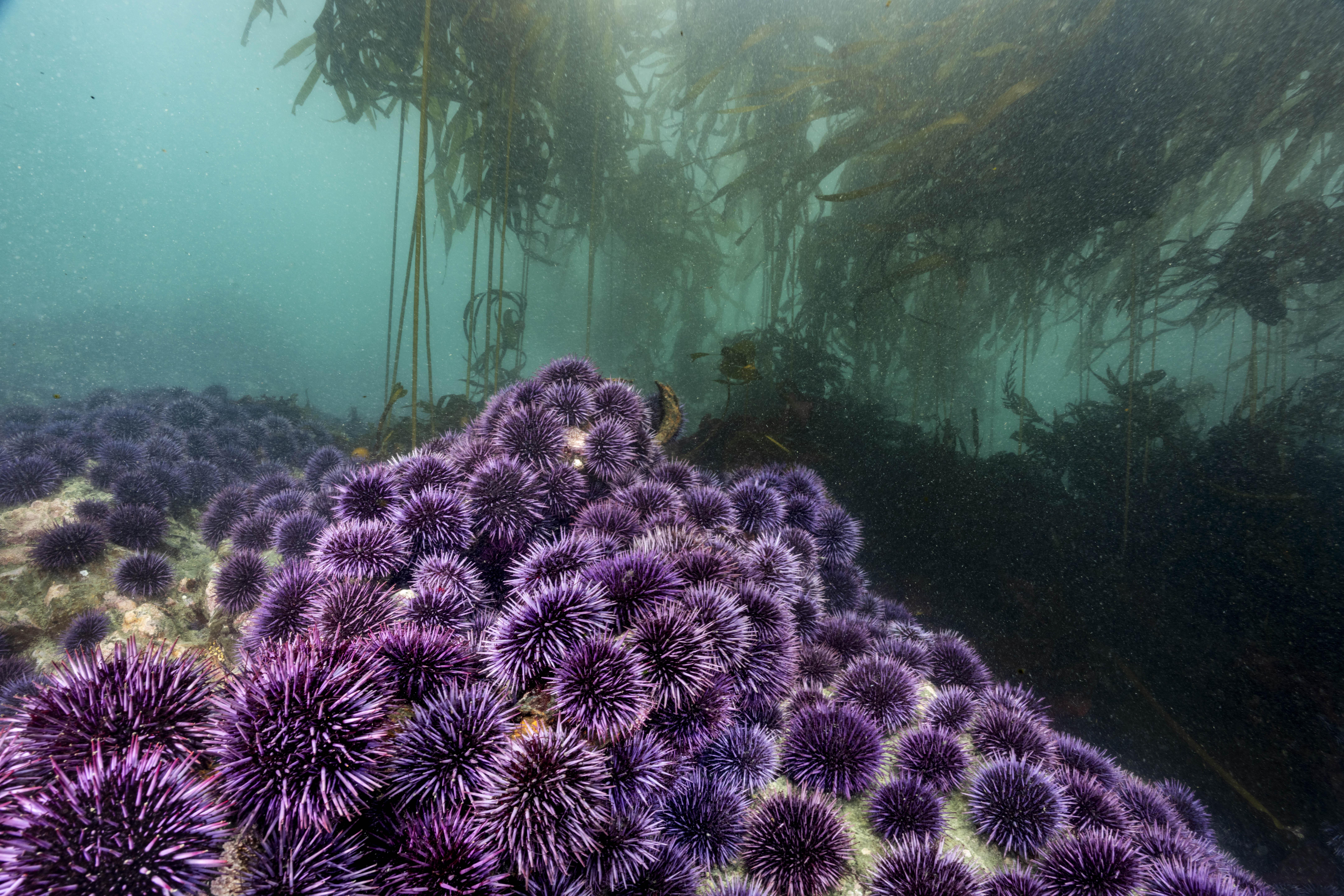
Kelp forests have become increasingly threatened by multiple stressors that are exacerbated by climate change, including sustained elevated water temperatures and loss of apex marine predators. These stressors have weakened kelp in certain regions and contributed to a substantial increase in native purple sea urchin populations, which feed on kelp. These shifts can fundamentally transform kelp forests to less productive urchin ‘barrens’.
Impacts to kelp forests have been observed in regions along the California coast, and northern California is the epicenter of rapid and unprecedented kelp ecosystem loss, where estimates indicate that over 96% of bull kelp along more than 350 kilometers of coastline has been lost since 2014. This drastic decline resulted in ramifications such as federal fisheries disasters, dive shop and other tourism infrastructure closures, and the loss of an ecosystem that supports wildlife, livelihoods, and coastal communities.
Our Goal
We are expanding bull kelp ecosystem recovery actions across two sites in Mendocino County in northern California, collectively resulting in over 30 acres of restored habitat. This will expand upon NOAA’s separate grant to the Greater Farallones Association for in-water kelp restoration work in Sonoma County in partnership with the Greater Farallones and Cordell Bank National Marine Sanctuaries. This will ultimately represent the largest network of bull kelp restoration projects in California.

Our Approach
The restoration of this iconic Pacific habitat involves a multi-pronged approach given the multiple stressors facing it. First, we are partnering with commercial sea urchin divers to strategically reduce purple urchin populations while supporting local livelihoods.
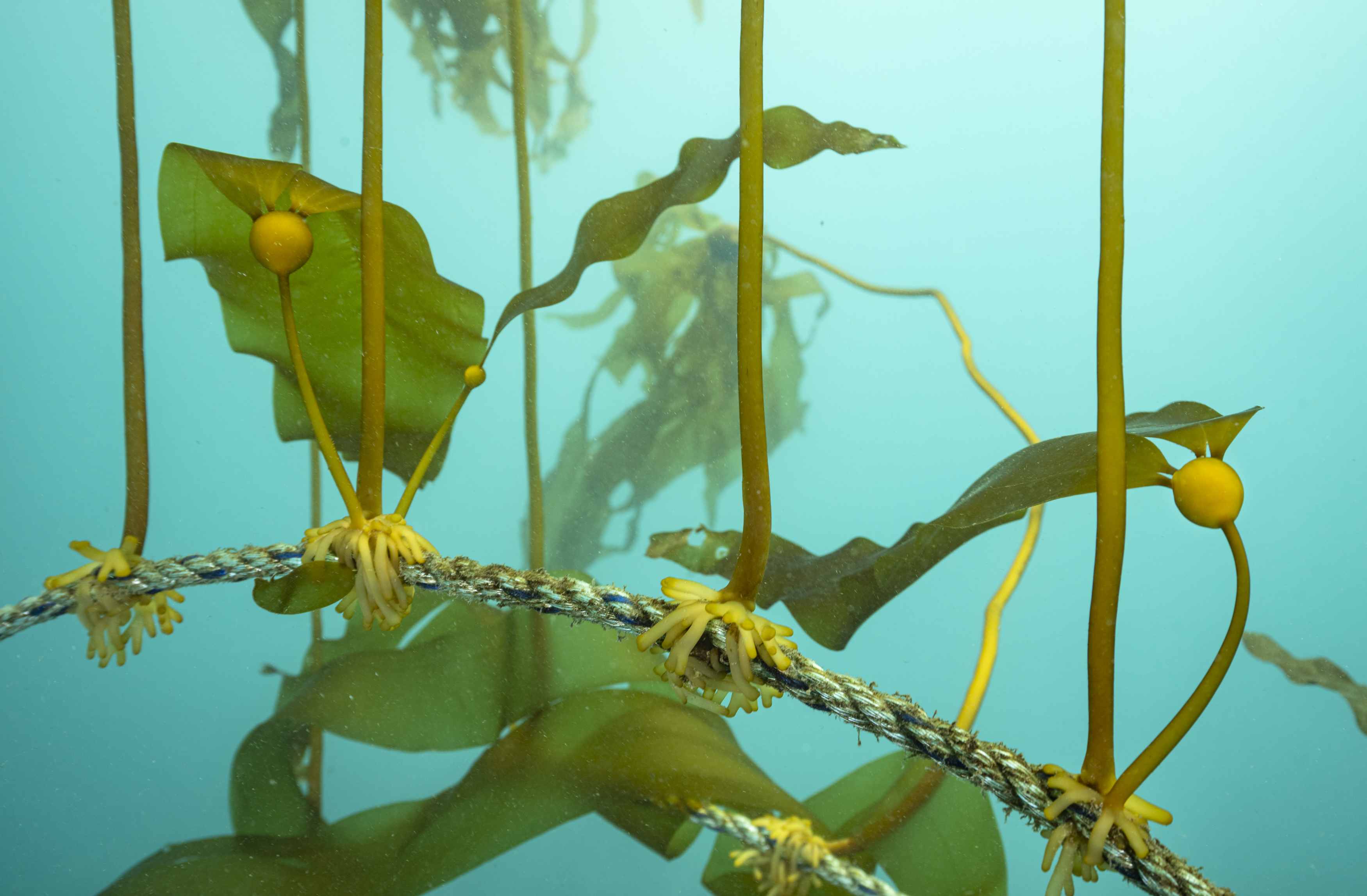
Second, with academic researchers and innovators, we are outplanting kelp to catalyze recovery and conduct in-water monitoring to evaluate success. One of the kelp outplanting methods we use is the Array to Recover Kelp Ecosystem Vegetation (ARKEV) unit. ARKEVs support kelp sporophytes grown in marine labs, that are then spliced onto suspended twine as part of the ARKEV outplanting unit. Next, the ARKEV units are placed underwater at kelp restoration sites where the juvenile kelp is buoyed above the seafloor via the ARKEV units. This reduces grazing by sea urchins during this vulnerable life stage and allows kelp to grow to reproductive maturity. Ultimately, the goal of kelp enhancement via ARKEV units is to help seed the seafloor and support future kelp forest growth.
Lastly, we are collaborating with the local community to support increased awareness and stewardship of these underwater forests and their many benefits.
Progress Toward Our Goal
Restore 30 acres of kelp forest across two sites in Northern California, utilizing grazer suppression and kelp outplanting.
23 acres restored
Progress: 76.6%
Goal of 30 Acres
Bull Kelp Workstream by the Numbers
Progress made at our kelp restoration sites by the end of 2025
-
79 tons
of Urchins Removed
-
700
Kelp Sporophytes Outplanted
-
80
ARKEVs Deployed
-
33%
Survivorship Across Sites


Sunflower Sea Star
The PCOR Initiative is establishing a statewide breeding program for sunflower sea stars to support species recovery.

About Sunflower Sea Stars
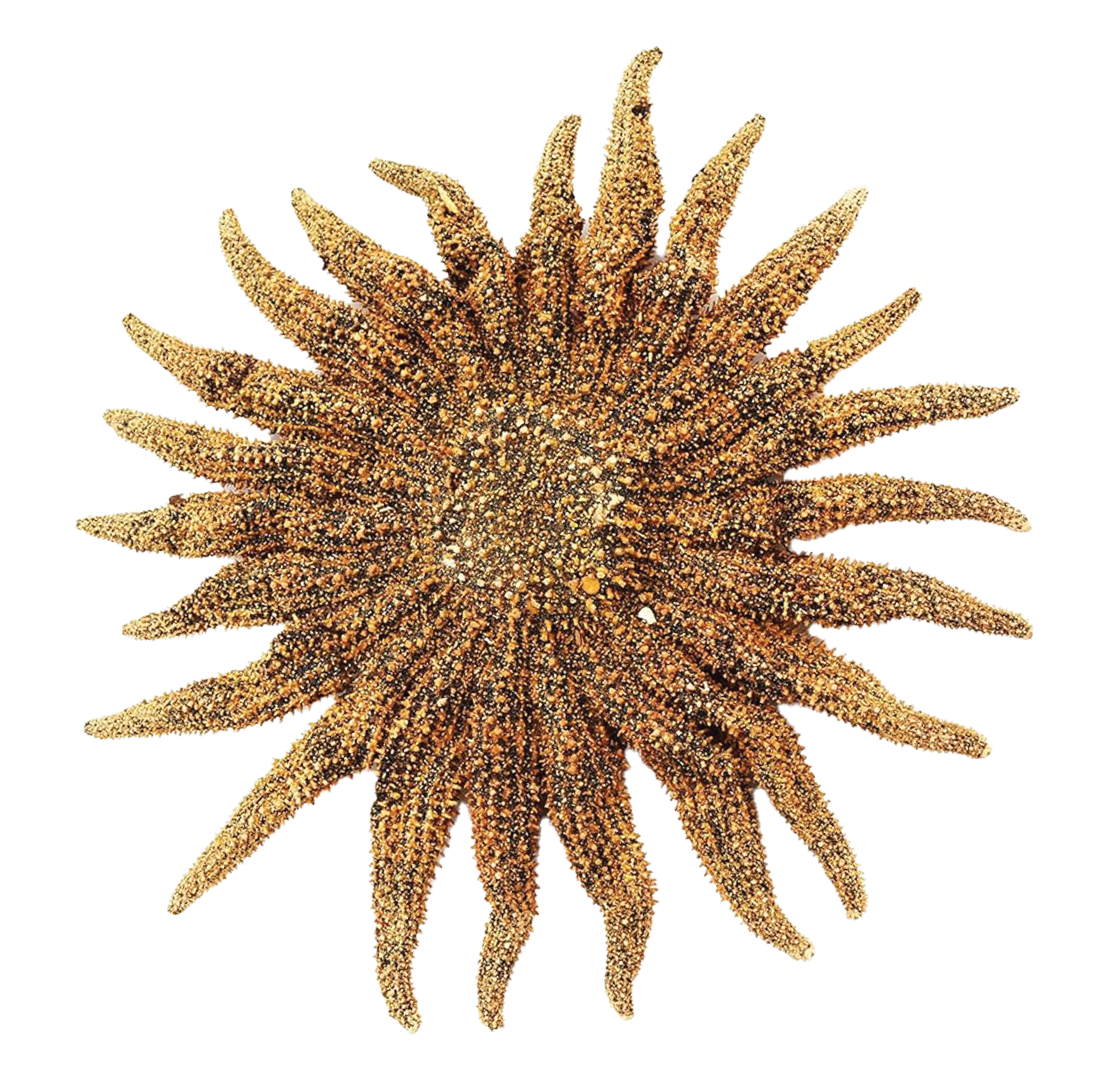
The sunflower sea star is one of the largest sea stars in the world. They can be up to one meter in diameter with as many as 24 arms. Fully grown, the sunflower sea star can weigh up to 11 pounds and express varying color combinations, including yellow, orange, blue, and purple. The sunflower sea star ranges from Baja California, Mexico, to the Aleutian Islands of Alaska, and serves as a key predator in maintaining healthy rocky reef ecosystems range wide. They promote kelp abundance via top-down pressure on sea urchin populations and grazing rates.
The Sunflower Sea Star Crisis
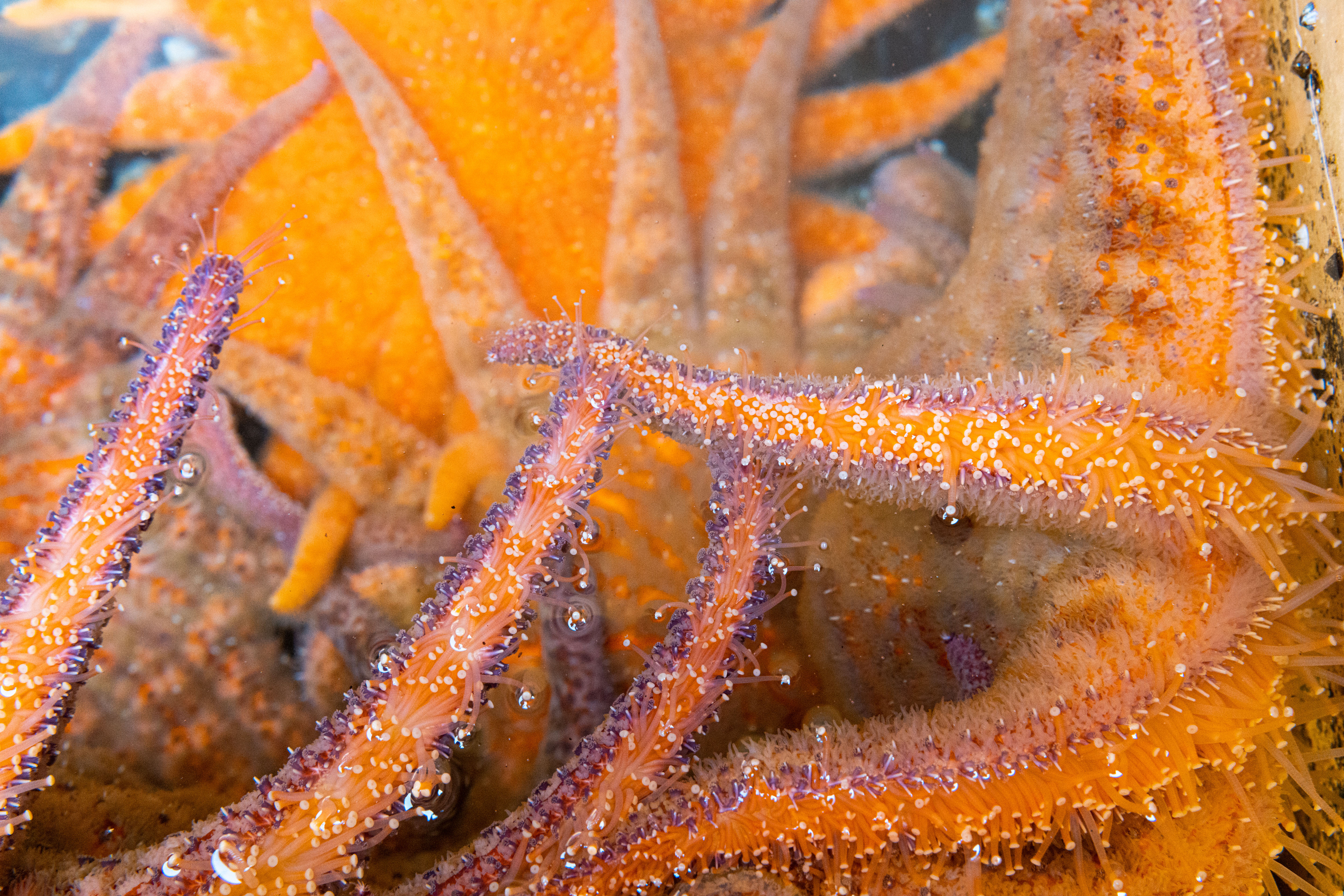
By 2013, sunflower sea stars were experiencing a decade-long population decline due to environmnetal stressors and more frequent warm water events. In 2013, a sea star wasting disease event reduced the rangewide population of sunflower sea stars by an estimated 94%, leading to an IUCN classification as Critically Endangered. Declines of 99-100% were estimated in the outer coast waters of Baja California, California, Oregon, and Washington. The severe and rapid decline of sunflower sea stars, and the documentation of associated ecological consequences, have garnered increased management attention and catalyzed efforts to recover this key predator via research and planning for eventual restoration of this species.
Our Goal
Establish a statewide breeding program by upgrading necessary infrastructure and labor capacity across 3 facilities and produce an outplanting assessment to advance species recovery. Support this work with robust education and community engagement efforts at public aquariums.
Our Approach
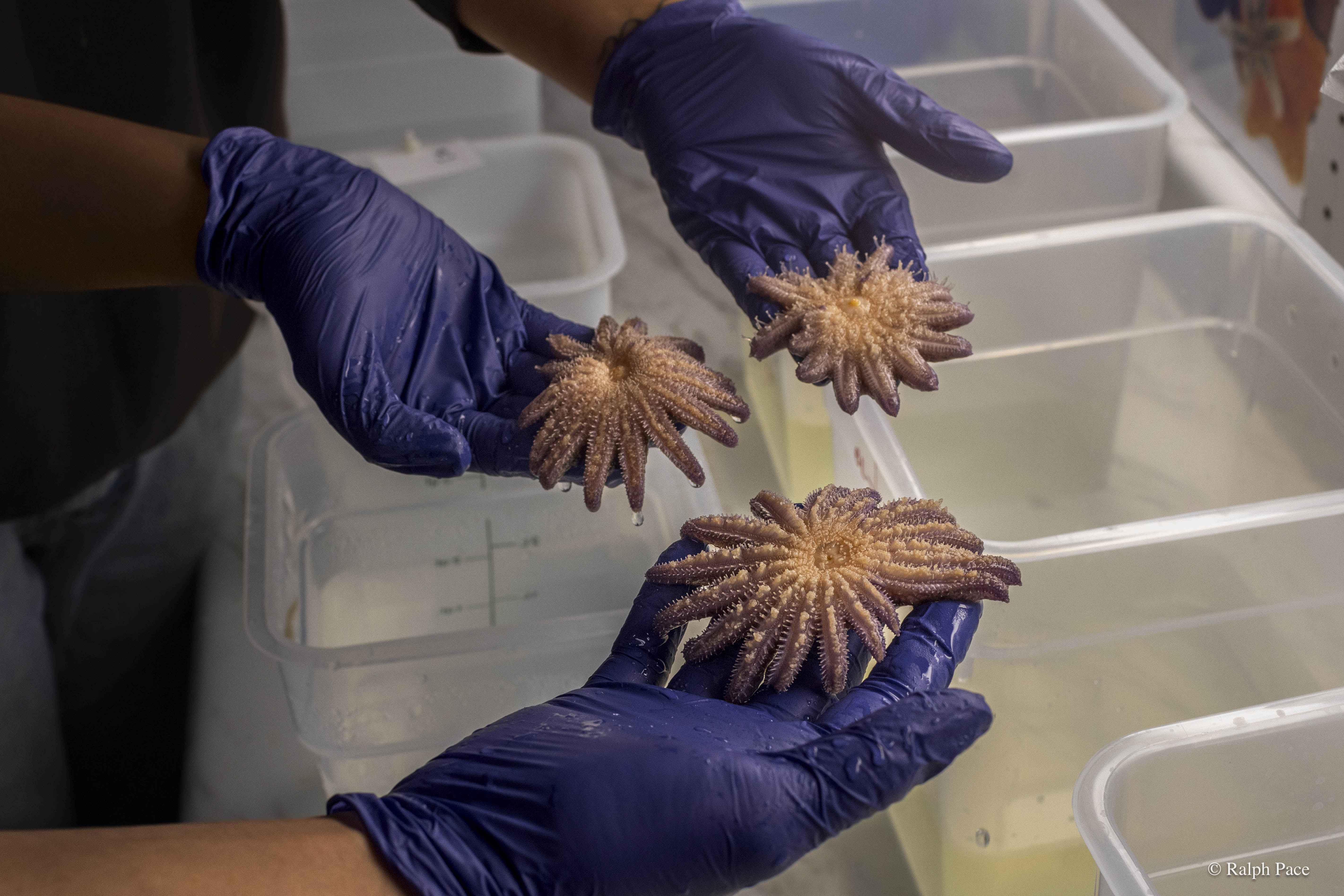
We are advancing sunflower sea star recovery in California by establishing a statewide conservation breeding program for sunflower sea stars. This includes implementing two strategies over the next three years. First, we are upgrading necessary infrastructure and supporting labor capacity for aquarium and conservation partners across a network of three geographically distinct sunflower sea star rearing facilities. This will enable the Initiative network to advance rearing protocols for sunflower sea stars now, and for other species in the future. We are also coordinating sunflower sea star disease research to improve the resilience of animals to Sea Star Wasting Disease. Second, we are combining insights from the diverse array of PCOR partners and other collaborators to produce an outplanting assessment to advance species recovery. Ultimately, we aim to inform and guide eventual in-water outplanting and restoration of sunflower sea stars in the future along our coast.
Progress Toward Our Goal
Establish a statewide breeding program by upgrading necessary infrastructure and labor capacity across three facilities.
43% of infrastructure & labor capacity upgrades complete
Progress: 43%
Goal of 100%
Sunflower Sea Star Workstream by the Numbers
-
3
Rearing Facilities
-
2
New Aquarium Exhibits
-
6.3K
Solstice Sea Star Search Observations
-
104
Cupid Cohort Stars in PCOR Partner Labs at the end of 2025


White Abalone
The PCOR Initiative is expanding production and outplanting of white abalone to build towards a self-sustaining population in the wild.

About White Abalone
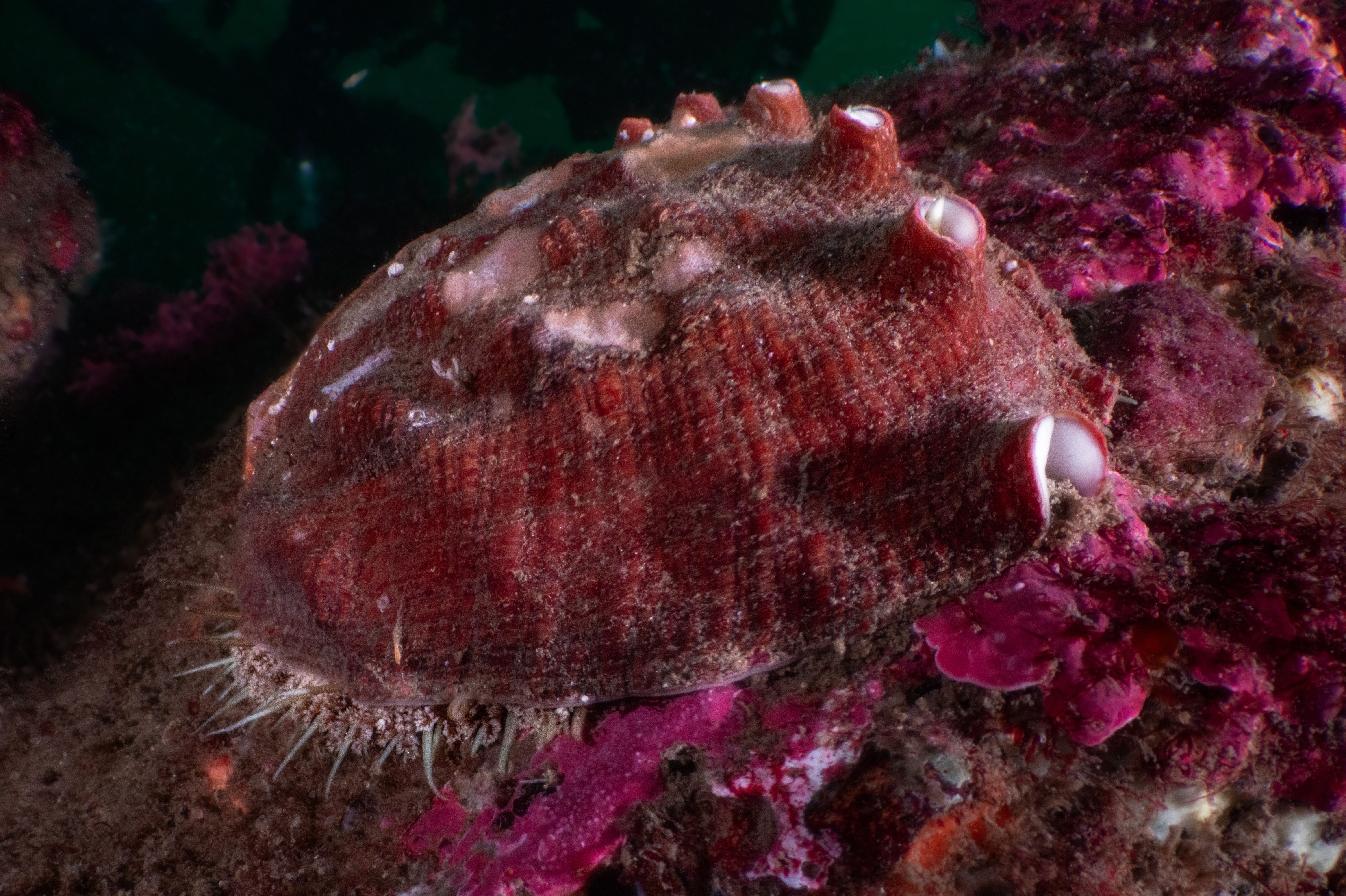
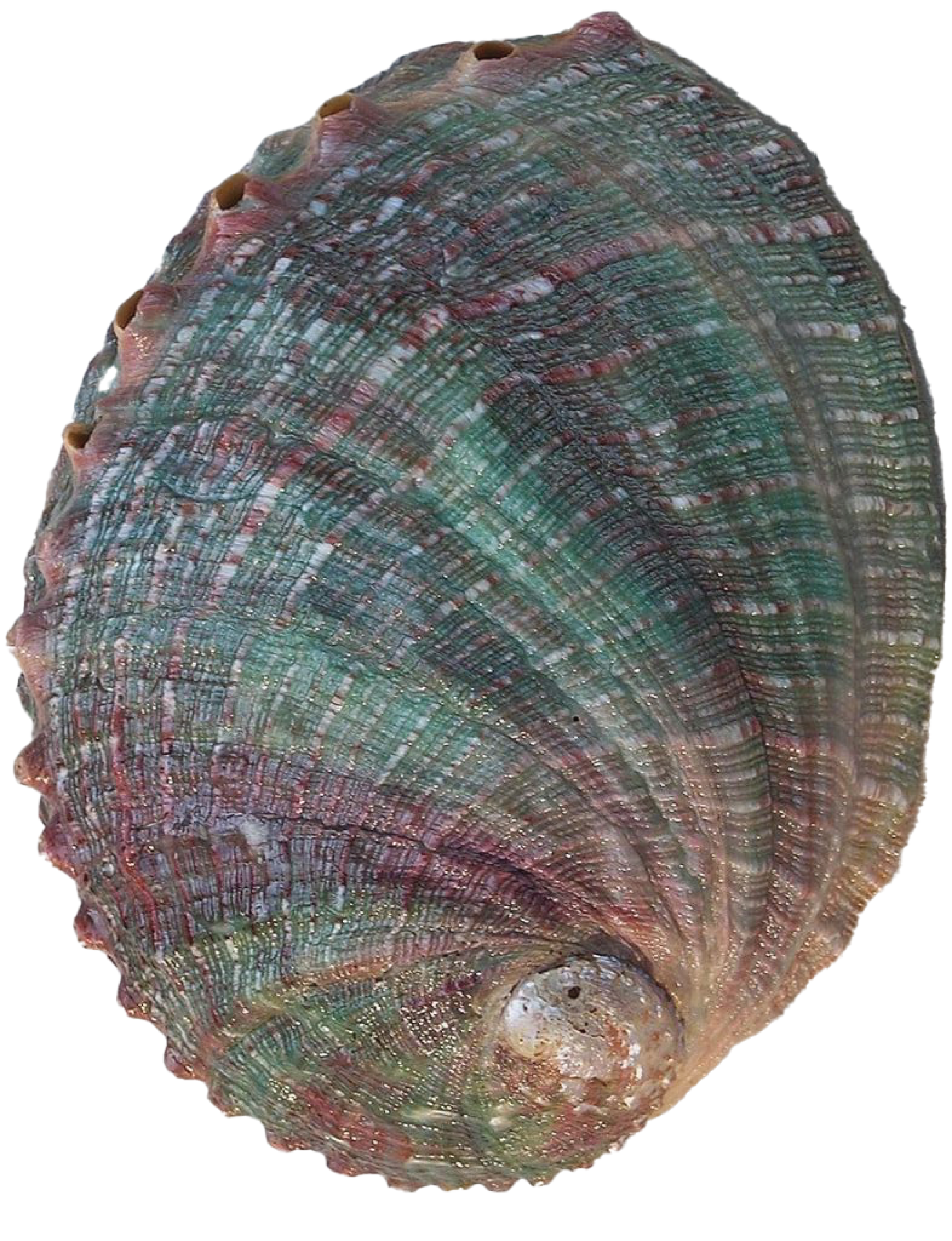
Abalone, marine mollusks that belong to a single genus, Haliotis, are found in temperate nearshore rocky reef ecosystems worldwide. Seven species are native to California, including the largest, the red abalone, and the deepest-occurring species, the white abalone. For over ten thousand years, abalone supported viable small-scale subsistence fisheries in California. Five of the seven species of abalone (red, pink, green, black, and white) sustained valuable commercial and recreational fisheries during the 1950s to 1980.
The White Abalone Crisis
The magnitude of abalone harvest quickly surpassed the capacity of populations to support them. By 1997, recreational and commercial fisheries for all abalone species were closed in ocean waters south of San Francisco. Several other stressors likely contributed to declines and lack of recovery of abalone in California, including disease, loss of habitat, and reproductive failure due to low densities. In 2001, the white abalone was the first marine invertebrate to be listed as Endangered under the US ESA and is a NOAA Species in the Spotlight, while the six other species are included in several state and federal recovery plans. The recreational-only (free diving) red abalone fishery in northern California was placed in a moratorium in 2017 due to low density attributed to a dramatic loss of kelp forest habitat beginning in 2014.
Our Goal
Outplant 10,000 red abalone and 17,500 white abalone to rocky reef habitat by 2027 to build towards a self-sustaining population in the wild.
Our Approach
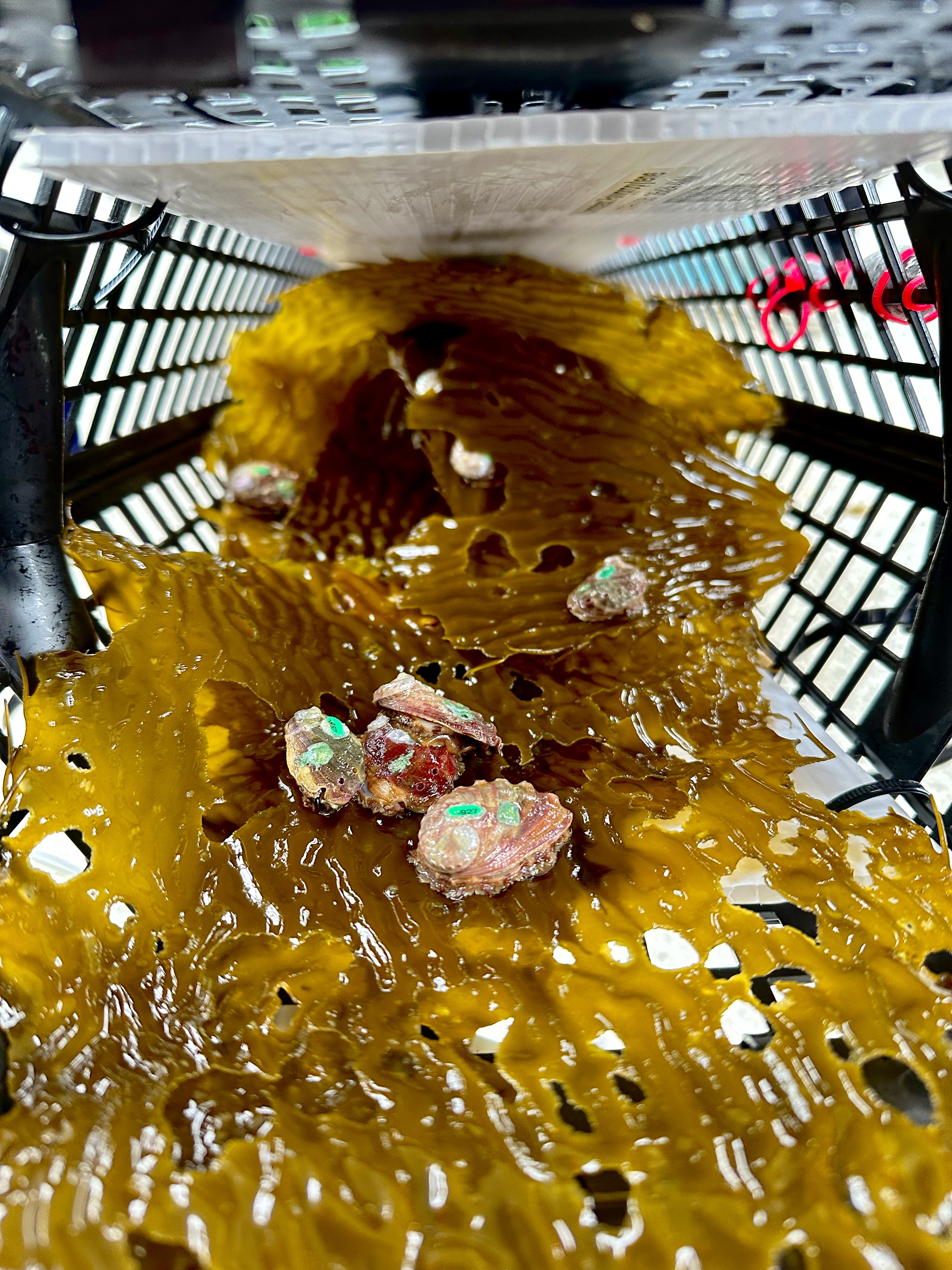
White abalone outplanting has already begun at four sites in their historic range, but efforts to achieve species recovery are limited by scale. We are working to increase both white abalone production in land-based aquaculture facilities as well as the number of white abalone outplanted at restoration sites in ocean waters of southern California. We are improving infrastructure to create dedicated culture space for white abalone and enable more white abalone to be reared for restoration purposes. Ultimately, we aim to more than double both the number of white abalone outplanted, as well as habitat area at five sites in the coastal waters of Los Angeles and San Diego.
By scaling up white abalone production in land-based facilities and outplanting efforts in coastal waters, we are working to establish sufficient numbers of white abalone of reproductive size to create viable populations on restored sites. To reduce risk and improve restoration success, red abalone are outplanted first as a proxy species to assess site suitability before white abalone are introduced.
Progress Toward Our Goal
Outplant 10,000 red abalone and 17,500 white abalone across multiple sites in Southern California.
6,853 number of red and white abalone outplanted
Progress: 24.9%
Goal of 27,500
White Abalone Workstream by the Numbers
-
4
New Outplanting Sites
-
17
Survey Days
-
5.2K
Red Abalone Outplanted
-
1.6K
White Abalone Outplanted


Workforce Development
The PCOR Initiative is launching a workforce development pilot program to support increased pace and scale of habitat restoration and species recovery efforts.

About Workforce Development
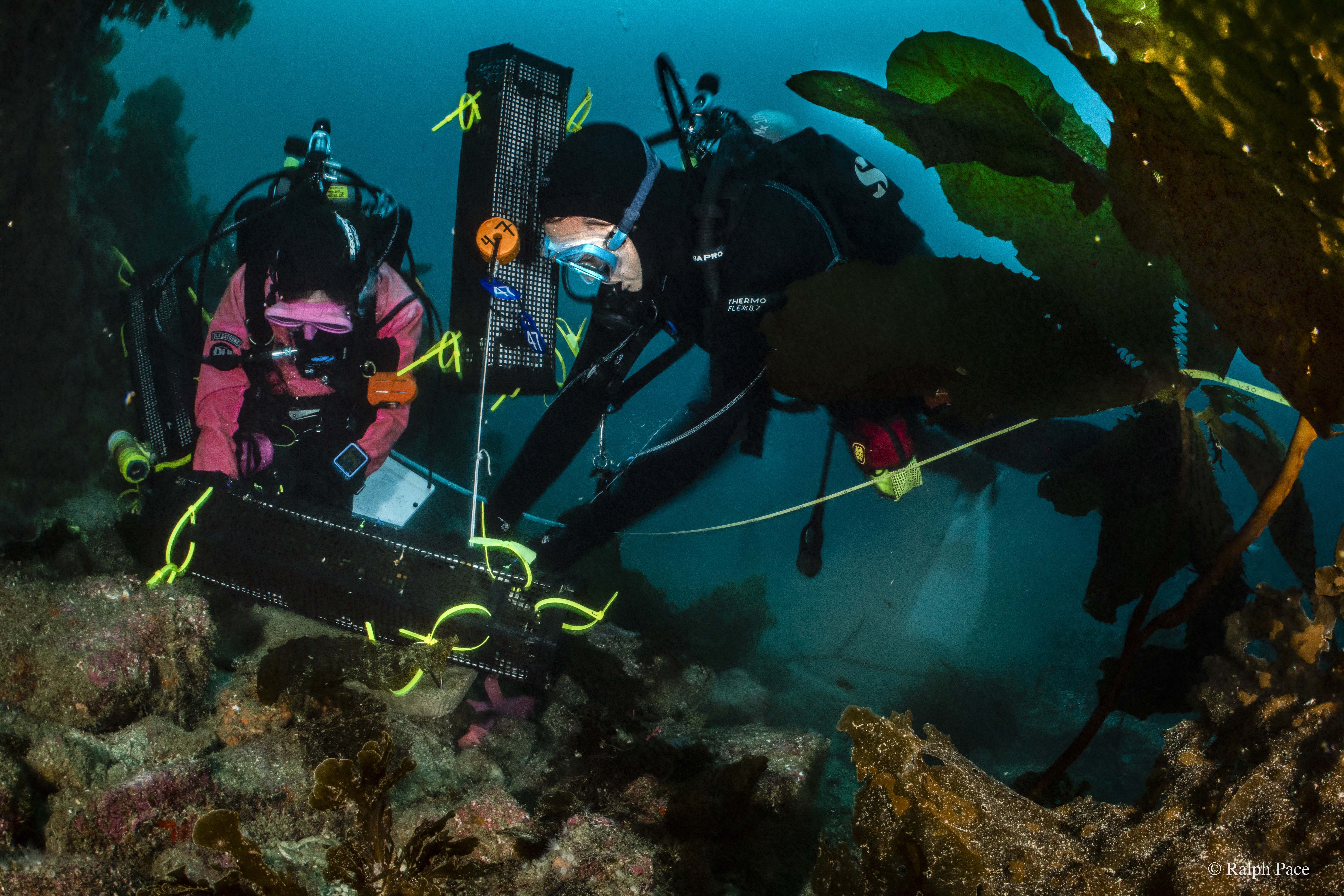
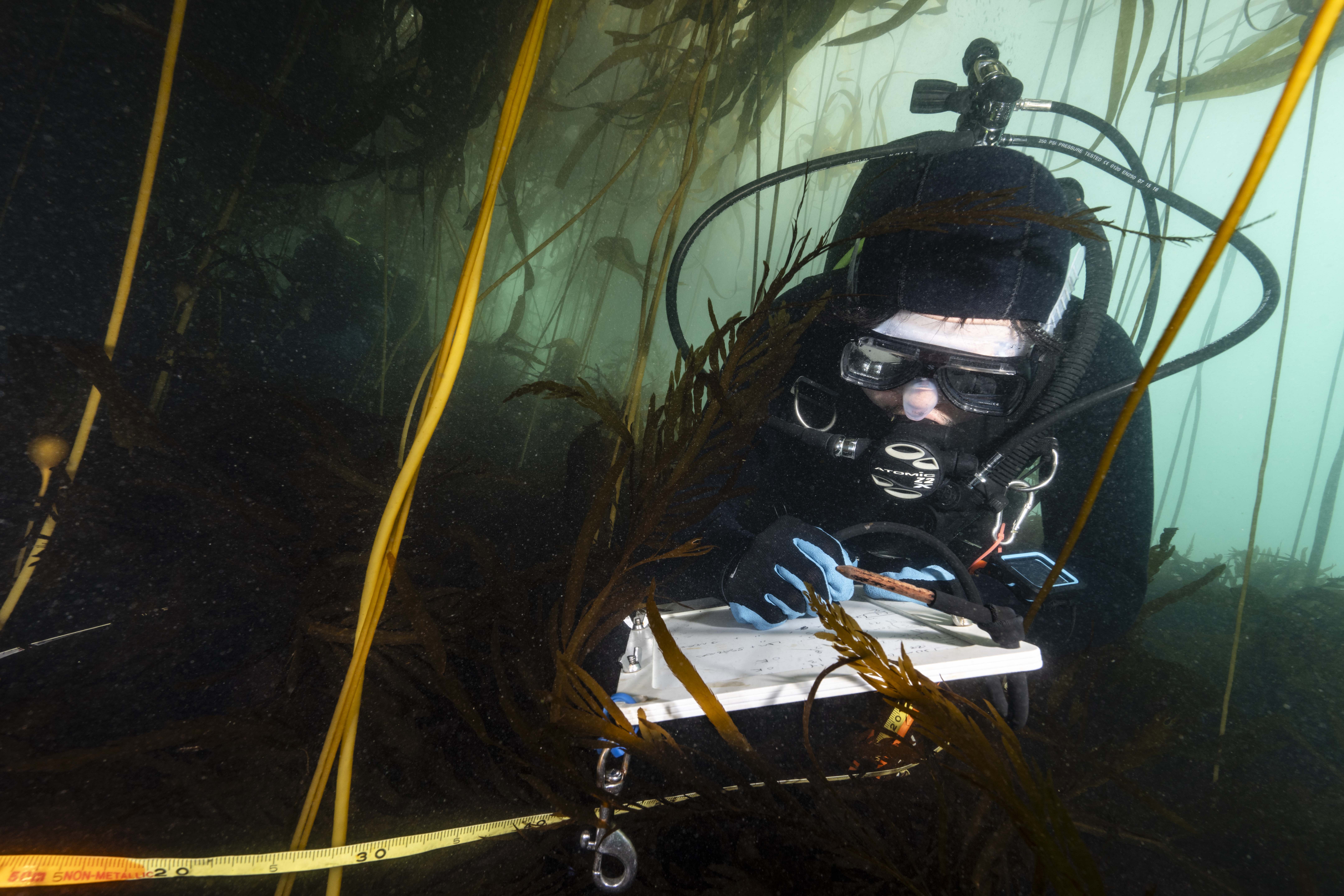
Due to the highly technical nature of the work involved in marine restoration, such as conducting hands-on work on boats, working underwater, scientific monitoring, and other activities, marine restoration is often bottlenecked by a lack of an experienced workforce. However, while workforce development programs have been around for nearly a century, few have developed programs specifically for subtidal marine restoration.

Our Goal
Develop and launch a marine restoration certificate program and develop and pilot a marine workforce development program.
Our Approach
PCOR Initiative partners are working to develop the curriculum framework for a new marine restoration certificate program at Mendocino College, designed to make training towards marine restoration jobs more accessible for students in California. We are also working to launch a first-of-its-kind marine workforce development pilot program in Mendocino County. The Pacific Ocean Restoration Training (PORT) pilot will provide opportunities for young adults to gain hands-on experience working on marine restoration projects while simultaneously supporting professional development opportunities that can lead towards a long-term career in marine restoration or closely related fields. These efforts aim to advance a skilled marine restoration workforce that can support implementation of marine restoration projects in Mendocino County, and that could be scaled across the state of California in coming years.
Progress Toward Our Goal
Develop and launch a marine restoration certificate program at Mendocino College
33% of certificate program creation progress
Progress: 33%
Goal of 100%
Workforce Development Workstream by the Numbers
-
1
Community College
-
3
New Courses Outlined
-
21
Organizations at Workforce Convening


